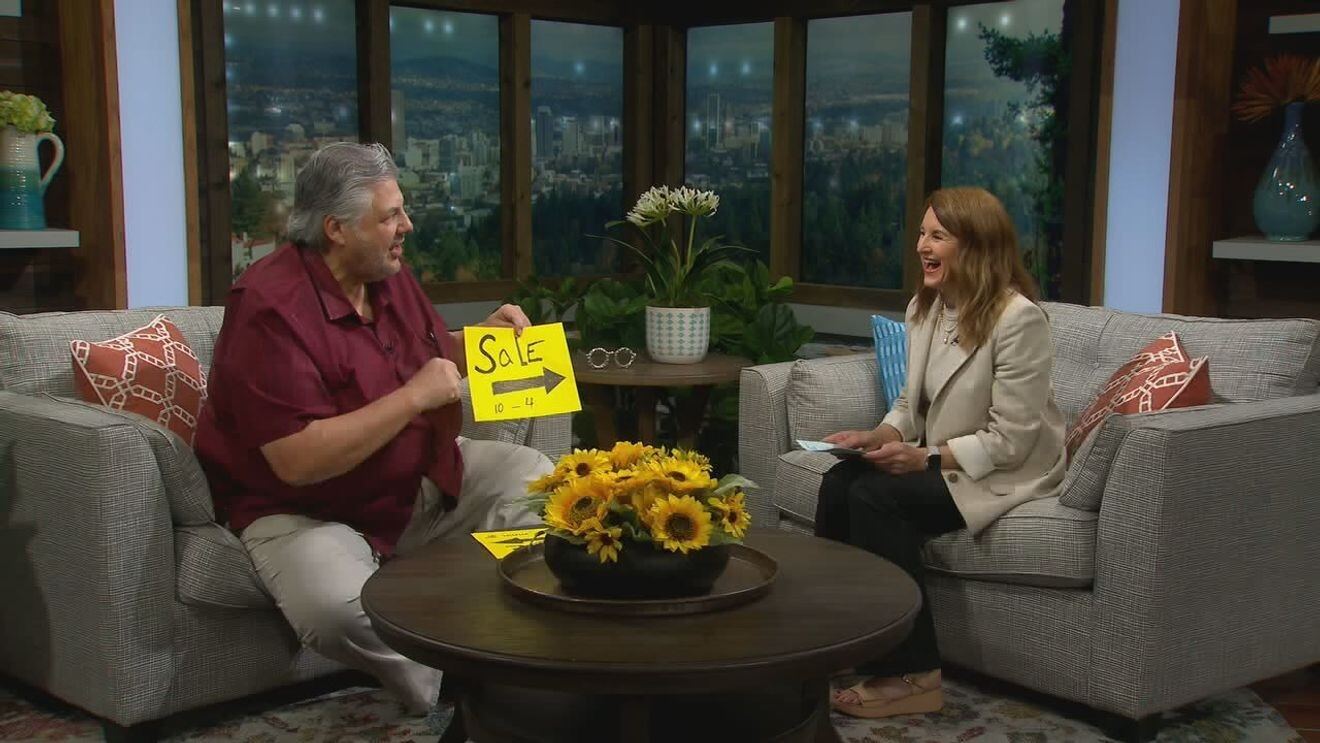

If you're planning to have a garage or estate sale soon, Gary Germer can help make it a winner! The antique appraiser joined us to share his expert tips.
First, understand the difference between a garage sale, a moving/downsizing sale, and an estate sale, and advertise accordingly. In a garage sale, the people have cleaned house and are getting rid of things they don't want. A moving/downsizing sale is like an estate sale, but they're trying to get rid of things they cannot take along with them, so there will be better things for sale. In an estate sale, the person has died and everything in the house is for sale.
Set up your sale to look like Nordstrom. Clean things, polish things, and dust it all off. Set everything up to be easy to see. Put all small and valuable things in one place, hopefully in a showcase, and have one person watch them — display is of utmost importance. If you don't think it's worth cleaning, then why would I think it's worth buying? It should look and feel sort of festive and fun.
Great signage: 75% of all your sales are going to go to people who saw your sign; 25% of your money comes from people who read your ad. Signs should be able to be seen from a distance and be easy to quickly understand — think of a person driving at 35 mph who needs time to read the sign, understand it, and make the turn. For advertising, use estatesalefinder.com, estatesales.org, and estatesales.net; for garage sales, Craigslist and Nextdoor.
Bartering: I like to have two-day sales — the first day, no bartering; the second day, I'm Monty Hall (you have to be over 50 to get that reference) and am willing to barter. But the first day, you should have the chance to get your asking price. And don't forget Tom Peterson, who said, "Free is a very good price." Consider the last hour of your sale taking all the most valuable things inside, and then saying all the rest is free — it'll clean out your garage. Never have free things until the last hour.
Pricing: consider walking through Goodwill to get an eye-opener on what they sell things for, and follow their lead. Never price anything for less than 50 cents, so if you decide to have a half-price day, it's easy to do the math. And remember, it's 2024 not 1974 — a cup of coffee is $4.00, a pizza is $25.00, so your pie pan at $2.00 is a deal. If you have expensive art, jewelry, or other things, consider paying a professional to help you price your sale for a flat fee — and never sell to an appraiser. Make it clear ahead of time that you will pay them but not sell to them.
Have change — at least $50, and ideally $100 in $10s, $5s, $1s, and quarters. Make sure everything is clearly priced, and price everything. Make sure you have good lighting, good smells (air freshener, baked goods, or potpourri), and some upbeat but not overpowering music in the background.
If you're having a garage/yard sale, never let anyone inside your home (make them pee in the yard). Always have two people minimum running the sale. As the money accumulates, take in the big bills and hide them inside the locked house. No early or late birds. Don't sell gold or silver at a garage sale — it's all liability and no upside; you can scrap it or sell it to a shop later. Don't take checks from someone you don't know, and never put anything on hold for more than half an hour.
Give a blessing to everything that sells — you're probably going to make a mistake and sell something too cheap, but bless it anyway and let it go.
Originally aired on AM Northwest, KATU.